

- Rinse pearl barley thoroughly before cooking
- Soak in water for 4–6 hours (optional, for faster cooking)
- Use 1 cup pearl barley : 3 cups water
- Cook on low to medium flame until grains become soft and tender
- Can be used in soups, salads, khichdi, porridge, and pulao
- Season as desired after cooking
- Suitable for regular consumption as part of a balanced diet
Good Barley Co.
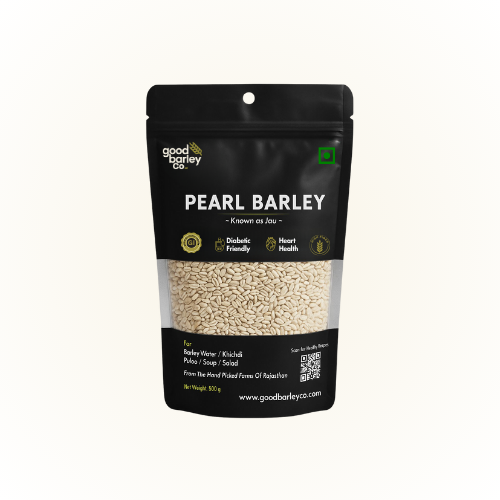
Pearl Barley
Pearl Barley
Regular price
Rs. 169.00
Regular price
Rs. 200.00
Sale price
Rs. 169.00
Unit price
per
Shipping calculated at checkout.
Couldn't load pickup availability
DESCRIPTION
Pearl Barley is a wholesome, versatile grain made from carefully cleaned and polished whole barley. Pearl Barley from Rajasthan's finest farms brings wholesome nutrition to your kitchen. This premium grain is incredibly versatile—simmer it into comforting khichdi, toss into vibrant salads, enrich your soups, or brew nourishing barley water. Packed with fiber and essential nutrients, pearl barley supports digestive health, helps maintain steady energy levels, and promotes overall wellness. Hand-picked for quality, each grain delivers authentic taste and maximum nutritional benefits. Transform your everyday meals into nutrient-dense dishes with this ancient superfood staple.
INGREDIENTS
100% Pearl Barley
USAGE INFO
BENEFITS
- Rich in Dietary Fibre
- Supports Healthy Digestion
- Helps Maintain Healthy Cholesterol Levels
- Supports Steady Blood Sugar Levels
- Promotes Heart Health
- Keeps You Full for Longer
- Easy to Cook and Digest
- Nutritious Whole Grain for Daily Meals
STORAGE
Store in an airtight container, in a cool dry place.


FAQ's
Is whole barley atta good for diabetes?
Yes, whole barley atta is considered a better option for people with diabetes because it is naturally high in dietary fibre and has a low glycaemic index (GI). This helps slow digestion and supports more stable blood sugar levels compared to refined flours.
How does barley atta help control blood sugar levels?
Barley atta contains soluble fibre, especially beta-glucan, which slows the absorption of carbohydrates. This allows glucose to enter the bloodstream gradually, helping reduce sudden post-meal blood sugar spikes.
What is the gluten percentage in your whole barley atta?
Our whole barley atta contains 1.56% gluten, based on NABL-certified lab testing.
Is your barley atta gluten-free?
No, our barley atta is not gluten-free. Barley naturally contains gluten.
However, its gluten content is almost 85% lower compared to regular wheat atta, making it a lighter option for many people who are not gluten-intolerant.
Can we make soft rotis with barley atta and eat them daily?
Yes. Barley atta can be used to make soft rotis and is suitable for daily consumption. For best results, proper kneading and resting of the dough are recommended. Many people also prefer blending it with wheat atta initially to achieve familiar softness.
Does barley atta help with cholesterol management?
Barley contains beta-glucan, a soluble fibre known to help reduce LDL (“bad”) cholesterol. This makes barley atta beneficial for heart health, especially for people managing diabetes or metabolic concerns.
Is whole barley atta good for digestion?
Yes. The high fibre content in whole barley atta supports digestion, promotes regular bowel movements, and helps nourish beneficial gut bacteria, contributing to overall gut health.

